Showing posts with label databases. Show all posts

Thursday, February 27, 2014

We Want Another One Just Like the Other One

If you find a book or an article that's really helpful and on-target for you research, how do you find more things like it?

In both our catalog and our databases, look at the links for the subject terms. Here's an example from our catalog.


In addition to strict subject linking, some of our databases have functions relying on keywords and relevancy ranking that may provide useful results. When you've found a good article, look around the edges of the page for things like "Find Similar Results" or "See similar documents." The results are only as good as their relevancy ranking, so what you get may or may not be on target for your interests, and not every database has this feature. But it could do some of the heavy lifting for you in rounding up research materials.

Tuesday, February 18, 2014

Know Your Bugs Bunny Music

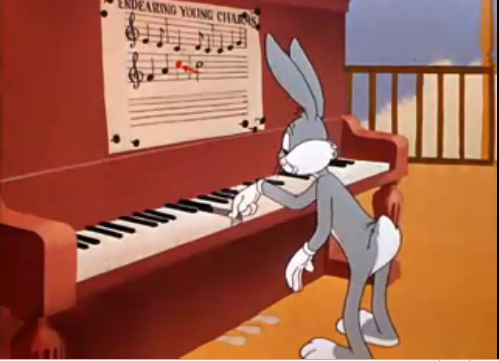
The Brattle Theatre in Harvard Square is hosting the Bugs Bunny Film Festival this week. Many of the Looney Tunes cartoons included musical references, and you can bone up on this with the library's help.

The All Bugs Revue includes the classic "What's Opera, Doc," which uses Wagner's operas as its basis, and has been analyzed in this article:

Jaszoltowski, Saskia. "Warum Wagner? Musikalische Grenzüberschreitungen in (Zeichentrick-)Filmen." Archiv für Musikwissenschaft 69.2 (2012): 154-64.


Now you may be thinking you don't need to know German to enjoy Wagner, but its hard to read a German article without being fluent in the language. Fortunately, our databases can help you out. This article is in the International Index to Music Periodicals Full Text, on of our many databases that includes a translation function. The computer-generated translation is choppy compared to what a knowledgeable human would do, but it's good enough to understand the author's intent.

The All Bugs Revue also has an example of a gag that was repeated in several of the Looney Tunes cartoons, where a character hooks up dynamite to a piano key and presents a foe with sheet music with that particularly note. The song is always "Those Endearing Young Charms." Whether you want to find out what the song sounds like without the ensuing explosion or want to stage your own similar gag (and the library takes no responsibility for your criminal actions), we have the score for the traditional Irish song, whose complete title is "Believe Me, If All Those Endearing Young Charms." As one example, it is in The Big Book of Irish Songs (MP1744 .B54 2003)


Thursday, December 5, 2013

What Can I Get RIGHT NOW? How to Use Limits for Instant Gratification

It's late in the semester, so you don't want to waste your time looking for things that aren't available immediately. Earlier in the semester, you might place a hold on a checked-out book or request a journal article via interlibrary loan because it's not in our physical or electronic collection. But deadlines are fast approaching, so let the library help you with instant gratification.

When searching our catalog, use the Advanced Search, and check the "Limit to Available" box. This will eliminate any resource where all the copies are checked out, damaged or otherwise unavailable. This is particularly useful when you're looking for a song that appears in lots of different scores.


Some of our databases, such as Oxford/Grove Music Online and our eBooks, are completely full-text, but many of our databases have a combination of full-text articles and citations only, which tell you where you can find an article without providing the full text. If you are too pressed for time to look in our print collection of magazines and journals or even to check a different database for electronic access, you can often limit your search results to those with full-text availability. Each database handles it slightly differently, although there are similarities in the same family of databases. Here's an example from Academic Search Premier from EBSCOHost, and it looks the same in EBSCOHost's Music Index and Business Source Premier.


If you're not finding what you need with using these limits, you might need to take more time. But let our resources do the work for you when they can.